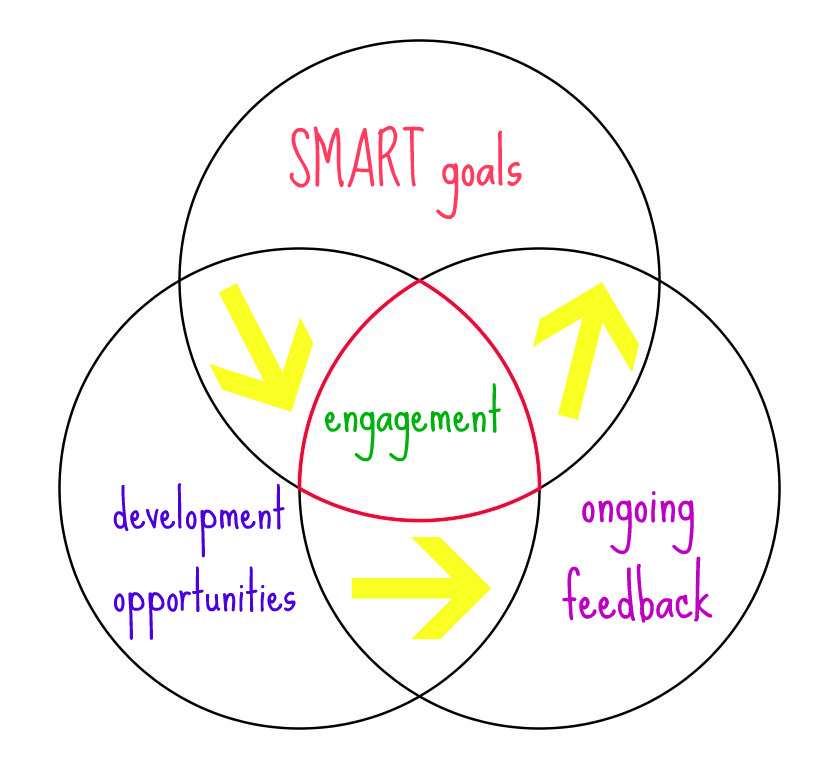
 In three words: Effective Performance Management
Performance management isn't just about rating employee performance. An effective performance management process supports employee engagement and development. By designing an effective process, and training managers and employees to use it, HR can play an important role in supporting the employee needs outlined by Gallup's Q12 statements used to measure employee engagement.
An effective performance management process ensures:
- Employee have clear goals that are linked to organizational goals, so they know what is expected of them and how they are contributing to the company's mission and purpose.
- Employee goals are SMART, so they have what they need to do their best.
- Employees get regular ongoing feedback on their performance that recognizes and encourages their work, and solicits their input.
- Employees are given the opportunity to learn and grow through performance based development plans.
Aligned Goals Give Them Context
An effective performance management process gives employees clear goals, and gives them a context for their goals by linking them to higher level organizational goals. The link needs to be tangible and concrete. Managers shouldn't just expect their employees to make the connection they need to make it for them, right on their performance appraisal form. It's not enough to simply link an employee's goals to their manager's; they need to be linked to the organization's mission and strategy. This linking helps each employee know how important they and their role are to the company's success.
SMART Goals Set Them Up for Success
By ensuring employees have SMART (specific, measurable, achievable, relevant, time-bound) goals, HR is helping ensure employees:
- know what is expected of them
- have the materials and equipment they need for their work
- have the opportunity to do what they do best
- are committed to quality
Each of these elements contributes to employee engagement.
But writing SMART goals isn't easy. In addition to providing training on writing SMART goals, HR can support them by building performance appraisal forms that include fields like: Title, description, dependencies, measures of success, start date, due date, etc. Having specific fields like this, right on the form, helps to remind managers to provide all the details needed to make a goal SMART.
Ongoing Feedback Create a Dialogue
Providing employees with ongoing feedback and coaching on progress, successes and challenges is a recognized performance management best-practice, as well as a key contributor to employee engagement. HR can support this ongoing dialogue by:
- including quarterly "mini-reviews" in their performance appraisal process
- providing managers with tools like comment helper text and coaching and development tips
- encouraging the use and sharing of journals or logs that capture details on performance
- including self-appraisals as part of the performance management process
All these efforts help give employees the feedback and coaching they need to succeed and gives them a "voice" in the process.
Development Opportunities Support High Performance
Learning activities are most effective when they're tied to employee performance. They need to either help address a performance gap, broaden or deepen and existing skill, or expand an employee's knowledge and expertise, all in practical ways that they can apply on the job. By ensuring that development planning is an integral part of the performance appraisal process, and even tying development plans to specific competencies and goals on the appraisal form, HR can help foster a culture of continuous development.
What do you think? What else should HR do to foster engagement?
Guest post by Stanley Janas, Director of Human Resources at Halogen Software. Stanley has more than 30 years HR experience in the private and public sectors. He is a regular contributor to the Halogen Software Employee Performance and Talent Management blog.
Leave a Reply